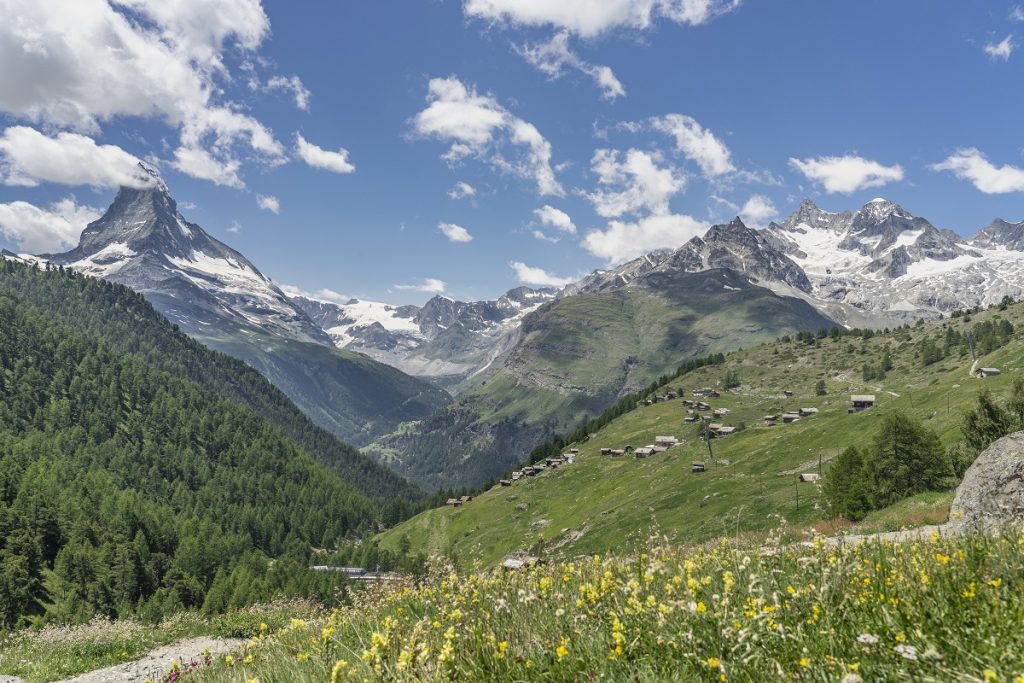
The Enduring Allure of Alpine Living
There are few places in Europe where lifestyle, investment, and natural beauty intersect quite so perfectly as in the Alps. Stretching across eight countries, this magnificent mountain range has always held a timeless appeal. Yet in recent years, it has evolved from being a holiday retreat for skiers and seasonal tourists into a thriving, year-round destination attracting full-time residents, international investors, and digital professionals seeking a better balance of life and work.
To live in the Alps today is not just to own a slice of mountain paradise — it is to invest in stability, health, and long-term value. The combination of clean air, security, cultural sophistication, and financial resilience has elevated the region from mere leisure destination to one of Europe’s most robust lifestyle investment markets.
From Seasonal Escapes to Sustainable Living
The Alpine story has changed dramatically over the past two decades. What was once a seasonal playground catering to winter sports has become a network of year-round communities. Improved infrastructure, new sustainability policies, and the rise of remote working have transformed the region’s economic model.
Once-quiet resorts like Chamonix, Verbier, and Kitzbühel now bustle with life through all four seasons. Summer hiking, cycling, climbing, and lake-based recreation have surged, with visitor numbers in many towns surpassing winter peaks. The traditional “off-season” barely exists in many parts of the Alps today.
Remote work has accelerated the shift. The global trend towards hybrid or home-based employment has encouraged a generation of professionals to swap city congestion for mountain tranquillity. With reliable broadband, international schools, and modern healthcare, living in the Alps has become a realistic lifestyle choice for families and entrepreneurs alike.
This permanence has had a clear economic consequence: rising property demand. Where once second homes dominated, there is now a thriving base of year-round residents, driving sustained demand for both purchase and rental accommodation.
The Property Market: Resilient and Refined
Alpine property markets are characterised by stability. Geography and regulation combine to limit supply while international demand continues to rise. The result is one of Europe’s most resilient real estate ecosystems.
In the French Alps, properties in the Haute-Savoie region — home to Chamonix, Morzine, and Megève — typically sell for between €10,000 and €15,000 per square metre, with luxury chalets in Courchevel and Méribel commanding more than €25,000 per square metre. These are figures that have grown steadily over the past decade, with few signs of correction despite global economic headwinds.
Switzerland, long seen as the jewel of the Alpine property market, remains a haven for the financially prudent. Strict ownership laws and limited stock have preserved value across key destinations like Verbier, Zermatt, and Crans-Montana. Prices are often expressed in Swiss francs, with prime chalets fetching CHF 20,000 to CHF 30,000 per square metre, depending on location and view.
Austria continues to attract value-conscious investors, offering world-class infrastructure, well-managed resorts, and lower entry prices. In the Tyrol region, resorts such as Kitzbühel, Saalbach, and Zell am See present chalet options starting from €1.5 million, with steady appreciation and excellent rental prospects.
In Italy’s Dolomites and Aosta Valley, a wave of investment has elevated once modest mountain towns into lifestyle destinations. Chalets in Cortina d’Ampezzo, the host of the forthcoming Winter Olympics, are fetching more than €12,000 per square metre, while smaller neighbouring villages offer remarkable value at half that price.
Scarcity, lifestyle appeal, and consistent international demand have together formed an unshakeable triad that underpins the Alpine market’s long-term strength.
The Rise of Year-Round Demand
Alpine property markets have traditionally been viewed through the lens of tourism — skiing in winter, then silence in summer. That model has vanished.
In France, more than 50 per cent of visitors now come outside the ski season, according to the Haute-Savoie Tourism Board. In Austria, summer tourism revenue has grown by 40 per cent in a decade, while Switzerland’s Lake Lucerne and Bernese Oberland regions attract an increasingly international clientele from spring to autumn.
This year-round momentum has extended the rental season and improved occupancy rates dramatically. Investors can now achieve gross yields between 3 and 6 per cent annually, depending on the location and management model. In dual-season resorts such as Les Gets and Saalbach, those returns are higher still.
Leaseback schemes remain popular in France, offering investors the ability to reclaim VAT on new-build properties — a saving of up to 20 per cent — while generating rental income through managed programmes. For private investors, the combination of capital appreciation, currency diversification, and lifestyle utility creates a strong case for ownership.
Infrastructure and Accessibility: The Engine of Growth
Infrastructure has been the silent force behind the Alps’ evolution from remote retreat to connected hub. Major airports including Geneva, Zurich, Milan, Innsbruck, and Munich now serve as international gateways to hundreds of Alpine towns and villages.
From Geneva, Chamonix can be reached in 90 minutes by car or train. Zurich to Davos takes under two hours by rail. Salzburg, Innsbruck, and Milan offer swift access to Austria and Italy’s most picturesque resorts. The Alps are no longer distant; they are accessible, efficient, and integrated into Europe’s wider transport network.
High-speed rail has added further momentum. The French TGV network links Paris to the Alps in under four hours, while Switzerland’s renowned rail system connects Zurich, Bern, and Lausanne with near-clinical precision. Electric car infrastructure has also expanded rapidly, reflecting the region’s environmental focus.
These transport and energy upgrades reinforce the Alps’ long-term investment case. Accessibility drives liquidity, and liquidity sustains value.
The Sustainability Imperative
Nowhere in Europe is sustainability more than a slogan; in the Alps, it is a necessity. Local governments and developers alike are embracing new environmental standards to protect fragile ecosystems and attract eco-conscious buyers.
New chalets are designed with energy efficiency as standard — triple-glazed windows, solar panels, ground-source heat pumps, and locally sourced materials. In Austria and Switzerland, “passive house” construction has become the new benchmark, combining near-zero energy use with modern luxury.
Resorts are adopting low-impact tourism models, limiting traffic, and promoting electric shuttles, car-free zones, and solar-powered ski lifts. France’s Les Arcs and Austria’s Werfenweng have become case studies in sustainable mountain development, balancing tourism growth with environmental protection.
For buyers, this trend adds both moral and monetary value. Energy-efficient homes not only reduce running costs but also future-proof investments against evolving regulations and shifting buyer expectations.
Health, Education, and Community
The appeal of Alpine living extends far beyond aesthetics. For many residents, it is about quality of life.
Healthcare standards in Alpine countries are among the best in the world. Switzerland ranks consistently within the top five globally, while France and Austria boast modern hospitals and local clinics throughout their mountain regions.
Education is equally strong. International schools in Geneva, Lausanne, Innsbruck, and Chamonix cater to multilingual families, offering both IB and bilingual programmes. For those relocating permanently, the transition from urban to mountain life is smooth and well-supported.
Perhaps most importantly, Alpine communities remain grounded. Despite their global reach, they retain a rare sense of cohesion — a blend of local tradition and international sophistication. Weekly markets, music festivals, and farm-to-table dining keep residents connected to their surroundings and to one another.
Financial and Legal Considerations
Buying property in the Alps varies slightly by country, but the fundamentals are consistent: transparency, security, and strong legal frameworks.
In France, notaries oversee all property transactions, ensuring that titles are clear and taxes paid. Transaction costs average between 7 and 8 per cent of the purchase price. In Switzerland, foreign ownership restrictions apply in certain cantons, maintaining exclusivity but requiring advance planning. Austria’s system is notably streamlined, with purchase costs averaging 6 to 8 per cent.
Annual ownership costs are generally modest. Property taxes in France are among the lowest in Western Europe, while Austria’s local levies remain minimal. Switzerland, though higher in entry price, offers exceptional long-term value preservation and favourable wealth tax conditions for residents.
Mortgages are widely available for EU and UK citizens purchasing within the Eurozone. Loan-to-value ratios typically range from 60 to 80 per cent, depending on residency status and property type.
Currency diversification is an added advantage. With the euro stable and the Swiss franc strong, Alpine property can serve as a hedge against domestic market volatility.
The Lifestyle Premium
To live in the Alps is to experience life in a higher gear — not faster, but fuller.
From lakeside villages in Annecy to ski-in chalets in Verbier, the sense of tranquillity and order is unmistakable. Air pollution is almost non-existent, crime rates are low, and access to nature is immediate. Morning walks replace commuter trains; weekends mean glacier hikes instead of city errands.
There’s also a culinary dimension that complements the lifestyle: from the cheese of Savoie to the wines of Valais and the fine dining of Kitzbühel, Alpine gastronomy blends regional authenticity with global excellence.
Cultural life, too, is vibrant. Film festivals in Gstaad, jazz concerts in Montreux, and mountain art fairs in Austria’s Salzburg region ensure that the Alps are anything but sleepy. The region manages the rare feat of combining rural serenity with cosmopolitan sophistication.
Market Outlook: Solid and Sustainable
The future of Alpine property looks robust. With limited development space, tightening environmental controls, and steady demand from across Europe and beyond, price trajectories are expected to remain positive.
While speculative gains are rare, consistent appreciation and reliable rental yields continue to attract long-term investors. Analysts predict that sustainable, dual-season resorts will outperform in the years ahead, particularly in France’s Savoie, Austria’s Tirol, and Italy’s Dolomites.
Currency factors also play a role. The strength of the Swiss franc continues to attract investors seeking safe-haven assets, while the eurozone’s stability supports liquidity in France and Austria.
In short, the Alps offer something rare in the modern property landscape: a tangible, lifestyle-led market underpinned by scarcity and trust.
A Lifestyle Investment Like No Other
Owning a home in the Alps is more than a real estate transaction — it is an entry into a way of life. Whether the goal is investment, semi-retirement, or remote living, the benefits extend beyond financial return. It is about reclaiming time, breathing cleaner air, and becoming part of a community that values sustainability, wellness, and balance.
There are few places where such harmony exists between lifestyle and long-term value. In the Alps, that harmony is not an ambition but a daily reality.
Financial Disclaimer: The information provided in this article is for general informational purposes only and does not constitute financial advice. While every effort has been made to ensure the accuracy of the content, market conditions may change, and unforeseen risks may arise. The author and publisher of this article do not accept liability for any losses or damages arising directly or indirectly from the use of the information contained herein.
Copyright 2025: skiingproperty.co.uk
Photograph: freepik.com